


Health risk assessment helps individuals understand their personal health risks by comprehensively evaluating factors such as lifestyle, medical history, and environment, enabling them to take appropriate preventive and intervention measures to promote health and prevent disease.
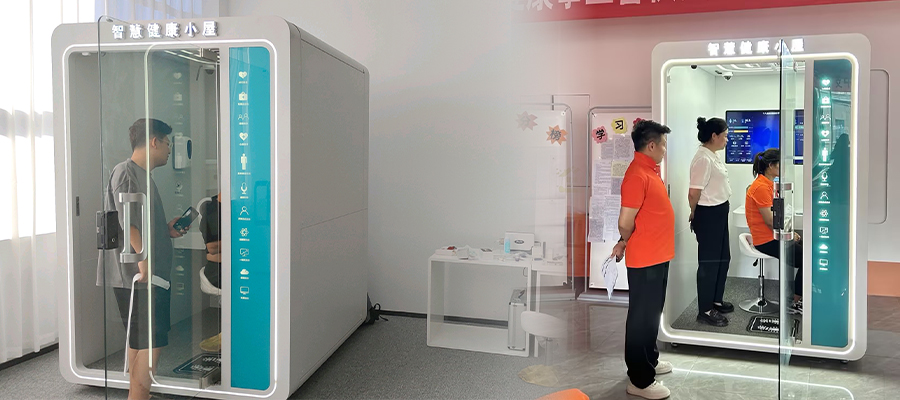
By studying the standard model for chronic disease risk assessment, Health Huthas developed an intelligent evaluation unit that integrates up to six types of chronic diseases. With basic vital sign measurements and simple lifestyle questionnaires, it can predict future risk levels for chronic diseases and provide corresponding health recommendations—simple and efficient.
Health risk assessment can help people understand their own health status.
By evaluating information such as an individual's lifestyle, family medical history, and physical examination data, it can reveal the individual's current health condition and potential health risks. For example, the assessment can inform someone whether they are in a state of obesity, whether they face risks of cardiovascular and cerebrovascular diseases, and whether there are potential risks of genetic diseases, etc. Thus, individuals can promptly become aware of their health problems and take targeted adjustments and improvement measures to maintain or enhance their physical health.
■ Health risk assessment can help individuals formulate personalized health management plans.
Everyone's health condition and lifestyle are different, and general health advice may not meet the needs of individuals. Through health risk assessment, the risks of individuals can be quantified, and personalized health management plans can be formulated based on their specific circumstances. For example, for individuals with a risk of heart disease, it can be recommended that they strengthen cardiovascular exercise, adjust their diet reasonably, and regularly monitor blood pressure and blood lipids; for individuals with a risk of diabetes, it can be recommended that they control their weight, exercise appropriately, and regularly test blood sugar levels. In this way, individuals can carry out targeted health management based on their characteristics and needs, reducing the risk of illness.
■ Health risk assessment is of great significance for individual and community health management.
By assessing an individual's health risks, high-risk groups can be identified and prioritized, providing more precise and effective health services. At the same time, through health risk assessment of the entire community or population, potential disease trends and group health problems can be identified, providing scientific basis and decision support for public health work. Thus, resources can be optimized, and the effectiveness and efficiency of health management can be improved.
Health risk assessment plays an important role in health management. It can help individuals understand their own health status, formulate personalized health management plans, and reduce the risk of illness; at the same time, it can also identify high-risk groups and group health problems, providing more precise and effective health management services for individuals and communities. It is believed that with the popularization of health management concepts and the advancement of technology, health risk assessment will play a more important role in the future, bringing more benefits to people's health.