


The construction industry has always been a key area for ensuring workplace safety. Scenarios such as high-altitude work, mechanical operation, and heavy physical labor place extremely high demands on the physical condition of workers. "Working while ill" and "working under the influence of alcohol" are potential hazards that not only threaten the lives and health of workers but also may trigger chain safety accidents, affecting project progress and enterprise efficiency. Nowadays, pre-job health detection machines are gradually replacing the traditional manual inquiries and scattered testing methods, becoming a new standard for site safety management. This intelligent device integrates multiple functions such as health screening, identity verification, and data management, reshaping the pre-job management process from the source, ultimately achieving a win-win situation of "safety guarantee for people", "precise matching of positions", and "comprehensive improvement of efficiency".
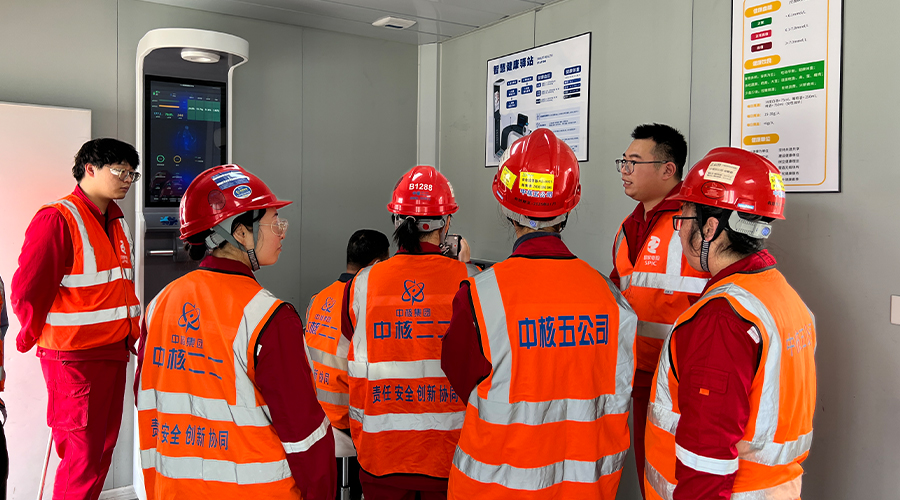
The pre-job health detection integrated machine integrates multiple core functions such as alcohol detection, body temperature monitoring, blood pressure and heart rate measurement, and blood oxygen detection. It uses high-precision sensors and AI algorithms to complete multi-index synchronous detection within 3 minutes, with data accuracy reaching over 99%. The detection process is fully automated, and workers only need to follow the voice prompts to complete the operation. No special guidance is required. This not only ensures the objectivity of the detection results but also enhances the convenience of the detection. More importantly, the equipment has established a rigid threshold of "only those with qualified tests can start work". If alcohol is overproof, abnormal blood pressure, etc. are detected, an audible and visual alarm will be triggered immediately, and the abnormal information will be uploaded to the background in real time. Managers can intervene and handle it immediately, fundamentally eliminating dangerous behaviors such as "working while ill" and "working under the influence of alcohol".
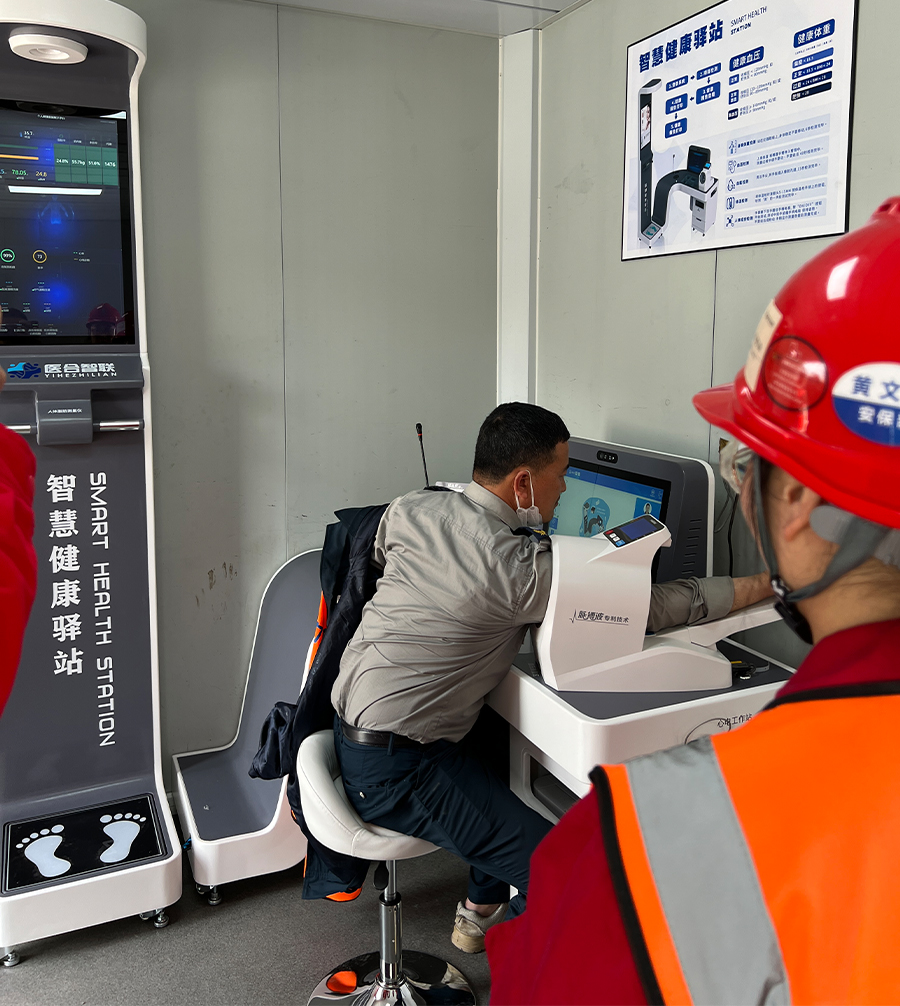
In the management of new employees, the pre-job health detection machine can integrate the function of ID card recognition to quickly complete the input of personnel information and health indicator testing. It can accurately identify whether there are any health risks that are not suitable for construction site operations, such as heart disease, high blood pressure, etc. After introducing the pre-job health detection machine to a railway construction project, through special health screening, 3 personnel who were not suitable for high-altitude work were successfully selected and adjusted to ground positions, effectively avoiding potential fall risks.
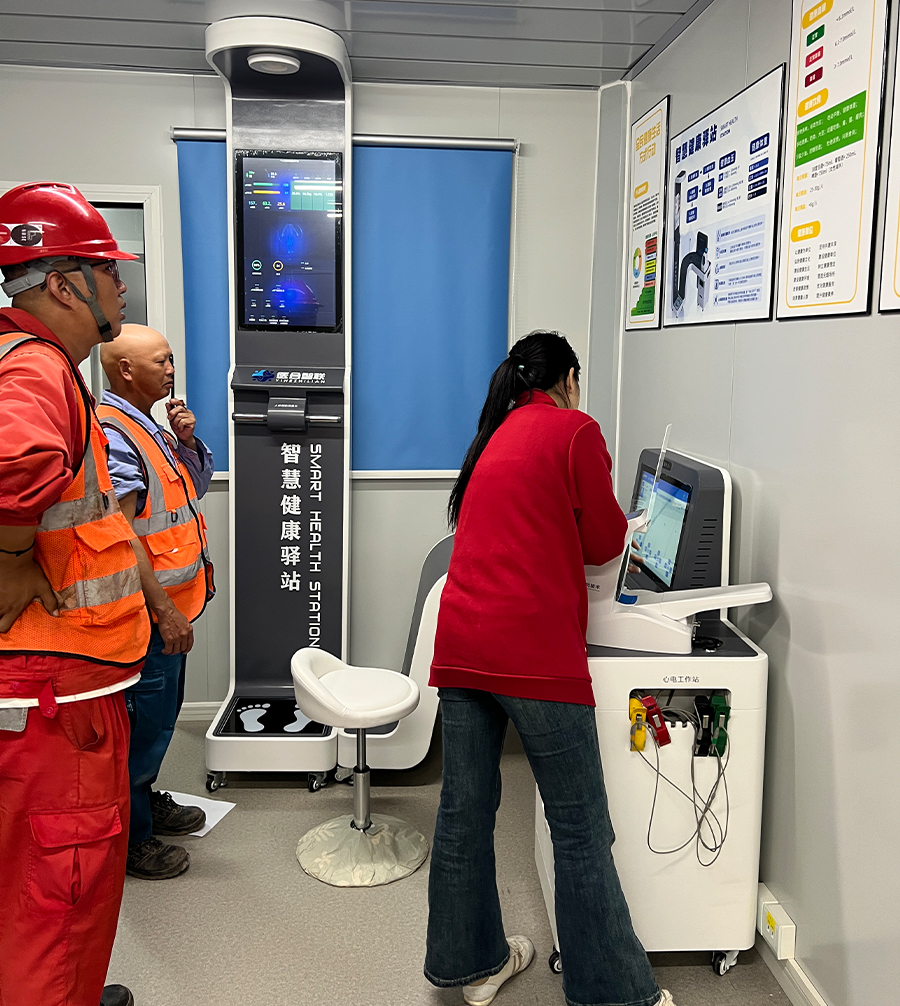
The widespread application of the pre-job health detection unit on construction sites is not merely a simple equipment update; it represents a revolutionary change in the safety management concept of the construction industry. It integrates "safety of personnel", "precise matching of positions" and "comprehensive improvement of efficiency" through technology as a bond, breaking the traditional management misconception of "contradiction between safety and efficiency", and achieving a "win-win situation for people, positions and efficiency". For workers, it is the "guardian" of occupational health; for enterprises, it is a "helper" for compliance management and a "driver" for cost reduction and efficiency improvement; for the industry, it provides a replicable practical path for the digital and intelligent transformation of construction safety management.
With the increasingly strict safety production regulations and the continuous advancement of smart construction site development, the pre-job health detection machine is bound to become a standard safety equipment for more construction sites. In the future, as technology continues to upgrade, the equipment will also achieve deep integration with wearable devices and the construction site monitoring system, building a more comprehensive safety prevention and control system. With the empowerment of technology, the construction industry will gradually achieve the safety management goals of "zero accidents, high efficiency, and humanization", allowing every worker to start work safely and return home healthily, and enabling every project to proceed safely and be completed efficiently.