


With the continuous advancement of the Healthy China initiative, convenient health services are accelerating their penetration to lower levels. Smart health cabins, with their convenient functions such as one-stop self-service medical examinations, intelligent health analysis, cloud-based file management, and AI-based traditional Chinese medicine assessments, have been widely implemented in community, enterprise, and pharmacy scenarios. Currently, the overall smart health cabins in China are still in the stage of rapid popularization, and the penetration rates in various scenarios vary significantly, indicating a very broad market growth potential.
I. Community Scenario: Highest Penetration Rate, Core Implementation Scenario
The community is the scenario with the highest penetration rate for smart health cabins. With the support of the 15-minute convenient health service circle policy, the overall penetration rate in urban communities is approximately 35%. Among them, the penetration rate in high-quality first-tier and new first-tier cities can reach 45%, while the penetration rate in second- and third-tier cities is around 25% to 30%. The penetration rate in county-level, township, and rural areas is relatively low, at only 12% to 18%. Currently, most cities have included smart health cabins as part of the community's basic facilities, providing free services such as blood pressure, blood sugar, and physical fitness screenings for residents. They mainly serve the elderly population and patients with chronic diseases, and are an important carrier of grassroots public health services.
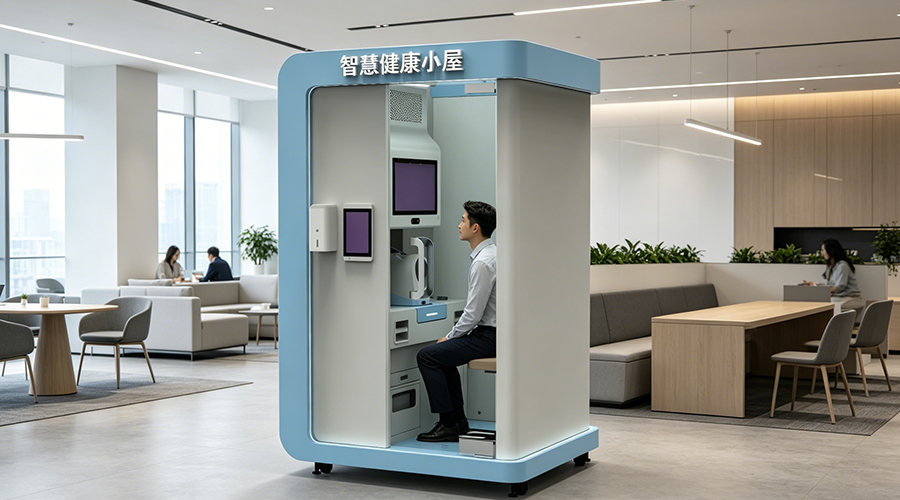
II. Enterprise Scenario: Steady Penetration, Prioritize Large and Medium-sized Enterprises
The demand for smart health cabins from enterprises continues to rise, mainly used for employees' regular physical examinations, pre-job health screenings, and employee health management. Currently, the penetration rate in large factories, state-owned enterprises, and industrial parks in China is approximately 22%, while for small and micro enterprises, due to limitations in space and budget, the penetration rate is less than 8%.
Enterprises and parks that rely heavily on labor are more likely to set up smart health cabins, in order to reduce the cost of health check-ups and enhance the health protection level of their employees. This has become a new trend in enterprise welfare provision.
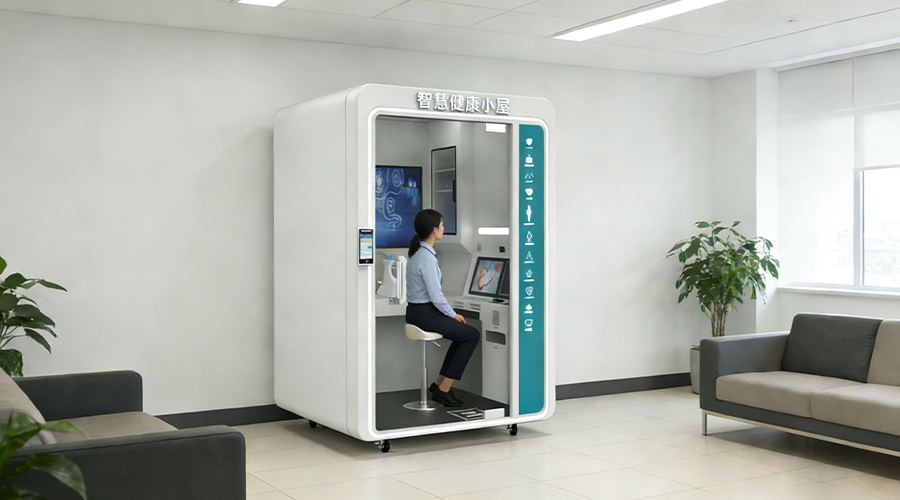
III. Pharmacy Scenario: Leading in Chain, Rapid Market Growth
Pharmacies are an important scenario for the marketization of the smart health cabin. The penetration rate of national leading chain pharmacies is approximately 19%. Through free physical examinations and traditional Chinese medicine constitution assessment, they attract customers with chronic diseases and provide health monitoring and medication reference. However, the penetration rate of small single pharmacies is less than 5%, and their layout intentions and implementation conditions are relatively weak. Overall, the penetration rate of the pharmacy scenario maintains a steady growth every year.
IV. Overall Trend: Penetration Rate Continues to Rise, Market Potential Is Huge
Based on data from various scenarios, the current national average penetration rate of smart health cabins is approximately 20%, and it has not yet been fully popularized. With the digital upgrade of grassroots health services, the number of installations in communities, enterprises, and pharmacies will continue to increase in the future. It is expected that in the next two years, the penetration rate in urban communities will exceed 50%, and the penetration rates in enterprises and chain pharmacies will rise to over 30%.
With its advantages of convenience, efficiency and inclusiveness, the smart health cabin is continuously filling the gap in convenient health check-ups at the grassroots level. In the future, it will also expand to scenarios such as elderly care centers, government offices, and schools, comprehensively broadening the channels for health services for the entire population to be accessible nearby.