


The core contradiction in traditional Chinese medicine clinics is that the "experience in the mind" of renowned traditional Chinese medicine practitioners cannot be replicated, while the urgent demand for an increase in patient flow is pressing. This contradiction can be solved by the AI assistant for traditional Chinese medicine.
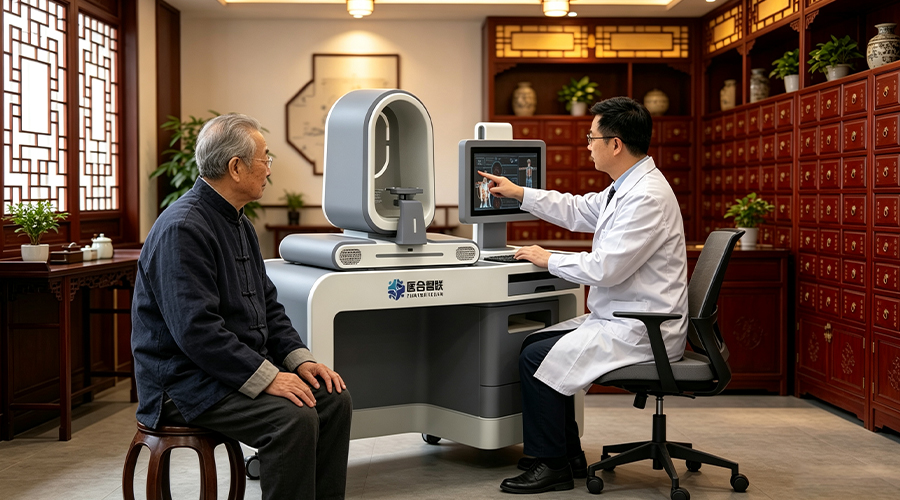
The predicament of traditional Chinese medicine clinics: Despite having a "golden reputation", they struggle to handle the flow of patients.
Many people think that traditional Chinese medicine clinics don't have to worry about patient traffic - after all, the four words "old doctor presiding over the clinic" are already a source of attraction. But those who actually operate such clinics know that the reality is far from optimistic.
Problem 1: There are only a few experienced doctors, and they simply can't handle the workload. Famous and experienced doctors have a shortage of consultation slots, patients have to wait in line for a long time, the experience is poor, and the retention rate is high. Meanwhile, the young doctors in the clinic often have to "sit on the bench" due to lack of experience and patients' lack of trust.
Problem 2: The consultation efficiency is low, and the services are highly homogeneous. Traditional Chinese medicine relies heavily on personal experience in "observation, auscultation, interrogation, and pulse-taking", and the diagnosis and treatment process is long, with low standardization. The same physical constitution identification may result in very different treatment plans from different doctors, and the patient experience is inconsistent.
Problem 3: It's difficult for patients to return and make repeat purchases, and there is a lack of "continuous touchpoints" for health services. After seeing the doctor, the patient leaves, and when will they come next? I don't know. The museum lacks follow-up measures, resulting in low customer loyalty. It relies solely on word-of-mouth to naturally attract back the customers.
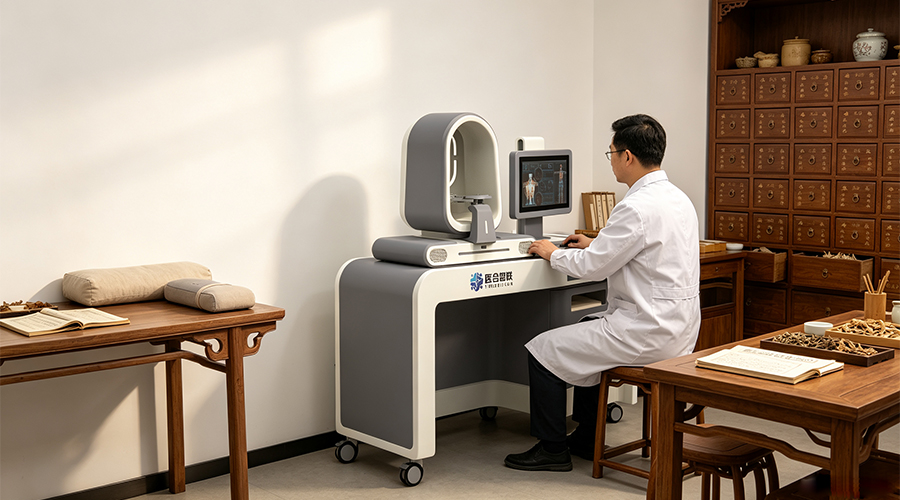
Traditional Chinese Medicine AI Assistant: Not a medical device, but an "amplifier of the wisdom of traditional Chinese medicine practitioners"
It is important to clarify that the Traditional Chinese Medicine AI Assistant is not a medical equipment and does not perform disease diagnosis or prescribe treatments. It is a comprehensive health product, positioned as an auxiliary tool for traditional Chinese medicine health services - including constitution identification, health consultation, recommendation of health care plans, and output of textual and graphic scientific explanations.
In simple terms: It transforms the decades of diagnostic thinking and health preservation experience accumulated by traditional Chinese medicine practitioners into an intelligent system that operates 24/7. When a patient arrives, the AI conducts a preliminary physical constitution analysis and health consultation, providing conditioning suggestions; then the physician makes a professional judgment based on this. The efficiency is increased, the service becomes standardized, and the energy of the traditional Chinese medicine practitioners is liberated.
This is not "AI replacing traditional Chinese medicine", but "AI amplifying the service capacity of traditional Chinese medicine tenfold".
Actual application scenarios
Scenario 1: On-site consultation and efficiency improvement · Patient screening
After arriving at the venue, patients complete a 3-minute physical assessment through the AI assistant of traditional Chinese medicine at the front desk. The system automatically generates a health record and a draft of treatment suggestions. During the consultation, the senior doctor directly deepens the diagnosis based on the AI's prediction, completing the process that previously took 15 minutes in just 5 minutes.
Scenario 2: Online consultation · Lead generation
Potential customers have a conversation with the AI assistant of traditional Chinese medicine on the WeChat platform, obtaining physical analysis and health preservation suggestions. The AI determines whether a face-to-face consultation is needed based on the conversation content and automatically sends a reservation link. The closed-loop process from online consultation to offline visit is seamlessly connected.
Scenario 3: Post-visit follow-up · Customer retention
After leaving the venue, the AI assistant of traditional Chinese medicine sends regular seasonal health preservation suggestions, dietary prohibition reminders, and re-examination time prompts based on the patient's physical type. Customers feel continuous care, resulting in a significant increase in repeat purchase rate and referral rate.
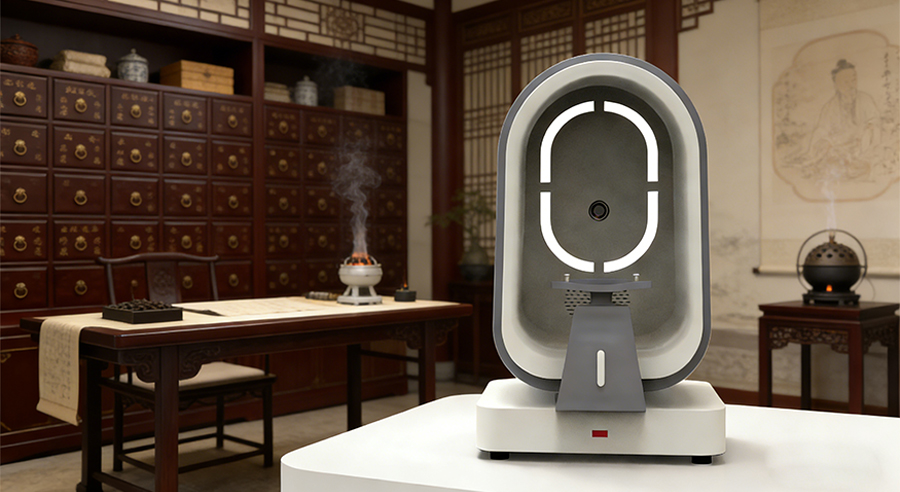
Not substitution, but empowerment
Some people are worried: Will AI replace traditional Chinese doctors?
No. Because the positioning of the AI assistant for traditional Chinese medicine is as a health product rather than a medical-grade device. What it does is to identify one's constitution, provide health consultations and recommend health care plans. It does not involve disease diagnosis or prescribing rights. The final professional judgment always remains in the hands of the traditional Chinese medicine practitioners.
Its value lies in: transforming the accumulated experience in the minds of experienced doctors into reusable capabilities within the system; shortening the growth cycle of young doctors from three years to three months; and changing the one-time visit-and-leave relationship with patients into a long-term health companionship.
The competition in traditional Chinese medicine clinics is shifting from "who has the most renowned doctors" to "who has a more complete service system". And the Chinese medicine AI assistant is the crucial step to complete the puzzle of the service system.