


At present, the pre-job health management of many enterprises has fallen into the formalistic trap of "emphasizing equipment but neglecting the closed-loop process". Enterprises purchase pre-job health monitoring devices and require employees to conduct daily pre-job tests, but they fail to provide corresponding management systems. In daily operations, there are often situations where the pre-job health monitoring devices alert of abnormal blood pressure, abnormal body temperature, or abnormal heart rate, but on-site personnel merely give a simple reminder without recording, not stopping the work, and not following up. The abnormal data recorded by the equipment remains dormant in the background for a long time and cannot be transformed into a basis for risk control, making the pre-job health screening merely a formality.
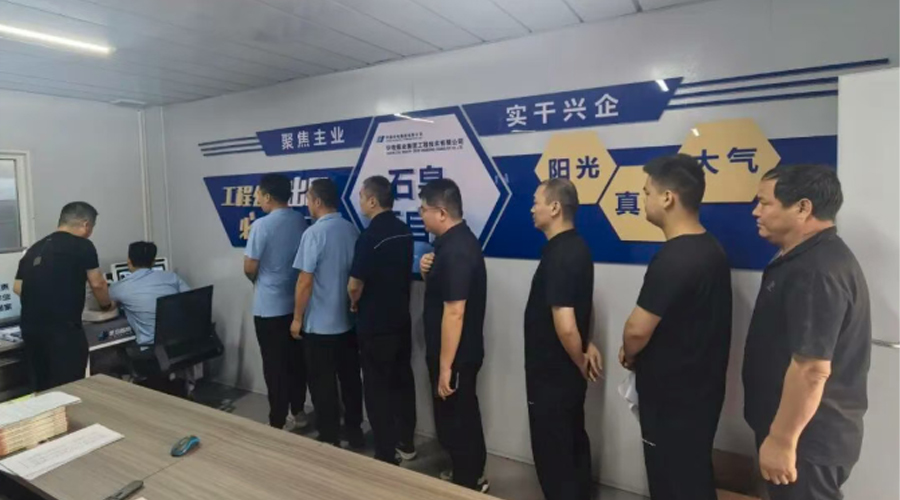
This management gap poses significant safety hazards in high-risk operation scenarios. Positions such as construction, chemical processing, and mechanical operation have extremely high requirements for employees' physical conditions. Physical fatigue, abnormal blood pressure, and other conditions can easily lead to operational errors and safety accidents. If the early warning function of the pre-job health monitoring equipment cannot be implemented and cannot prevent employees from working while sick or under dangerous conditions, even the most advanced detection equipment will be ineffective. The root cause of many safety hazards is not the failure of the pre-job health monitoring equipment to detect abnormalities, but the absence of an abnormal handling closed-loop.
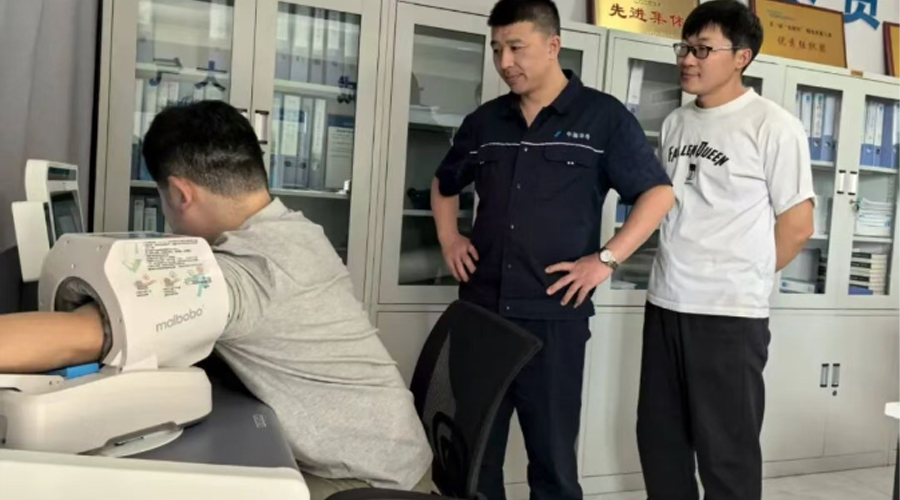
The truly effective health management system is based on the pre-job health monitoring equipment, which builds a complete closed-loop management system covering "early warning and analysis - classification handling - follow-up visit - review and optimization", ensuring that every abnormal data has a practical outcome.
Precise early warning and assessment.
Relying on the intelligent system of the pre-job health monitoring device, and based on the differences between ordinary positions and high-risk positions, specific health thresholds are set for each. The device automatically detects abnormalities and synchronously sends warning information to the managers, enabling the timely discovery and notification of risks.
Grading and standardized disposal
For the different abnormal levels identified by the pre-job health monitoring device, implement standardized procedures: for minor data fluctuations, conduct on-site inquiries and registration, and conduct dynamic observation; for moderate abnormalities, immediately suspend work, retest and verify, and collaborate with the medical room to investigate the cause; for severe abnormalities, immediately suspend working rights, have a dedicated person accompany the patient for medical treatment and report for record, and resolutely prevent working while ill.
Dynamic follow-up visits
Input the abnormal data from the pre-job health monitoring device into the individual employee's health file to form a dynamic database. For employees who have shown abnormal results, conduct focused screening using the pre-job health monitoring device every day to continuously monitor their recovery status. For employees who repeatedly have health issues, assess the job fit and, if necessary, reassign them to avoid risks.
Regular review and optimization
The enterprise regularly exports the detection, abnormality and handling data of the pre-job health monitoring equipment, conducts phased reviews, and analyzes the high-incidence positions, periods and causes of health abnormalities. It then optimizes the management systems such as shift scheduling, heat prevention and rest based on these findings, ensuring that the management measures meet the actual safety requirements.
Equipment is the foundation, management is the core, and the closed loop is the key. The pre-job health integrated machine provides digital support for workplace health and safety, but the equipment cannot independently mitigate risks. Without closed-loop management, even the most advanced pre-job health integrated machine is just an idle piece of hardware and cannot build a solid safety defense line.
Safety production is not something to be taken lightly. Equipping each position with a pre-job health monitoring device is merely the beginning of management. Only by establishing and effectively utilizing a complete closed-loop management system for the entire process, and thoroughly implementing the handling, tracking, and review of abnormal situations in all aspects, can the warning function of the pre-job health monitoring device be truly utilized. This can prevent safety accidents caused by physical factors at the source and safeguard the health of employees and the overall safety production situation of the enterprise.